


Your shopping bag is empty




/on/demandware.static/Sites-CTShirts-CA-Site/-/default/dw046a80af/images/3-line-logo.png
article
written by charles tyrwhitt
30/07/2026
Styling Guide
How To Master Business Casual (And Smart Casual)
We can hear you pondering: “What does business casual actually mean – and is it the same as smart casual?” If you're wondering what business casual is, it's work-appropriate, polished and practical. What is smart casual? It's similar, but often a touch more relaxed and open to personal style. The best approach is to aim slightly smarter when you’re dressing for the office – then relax it when the setting allows.
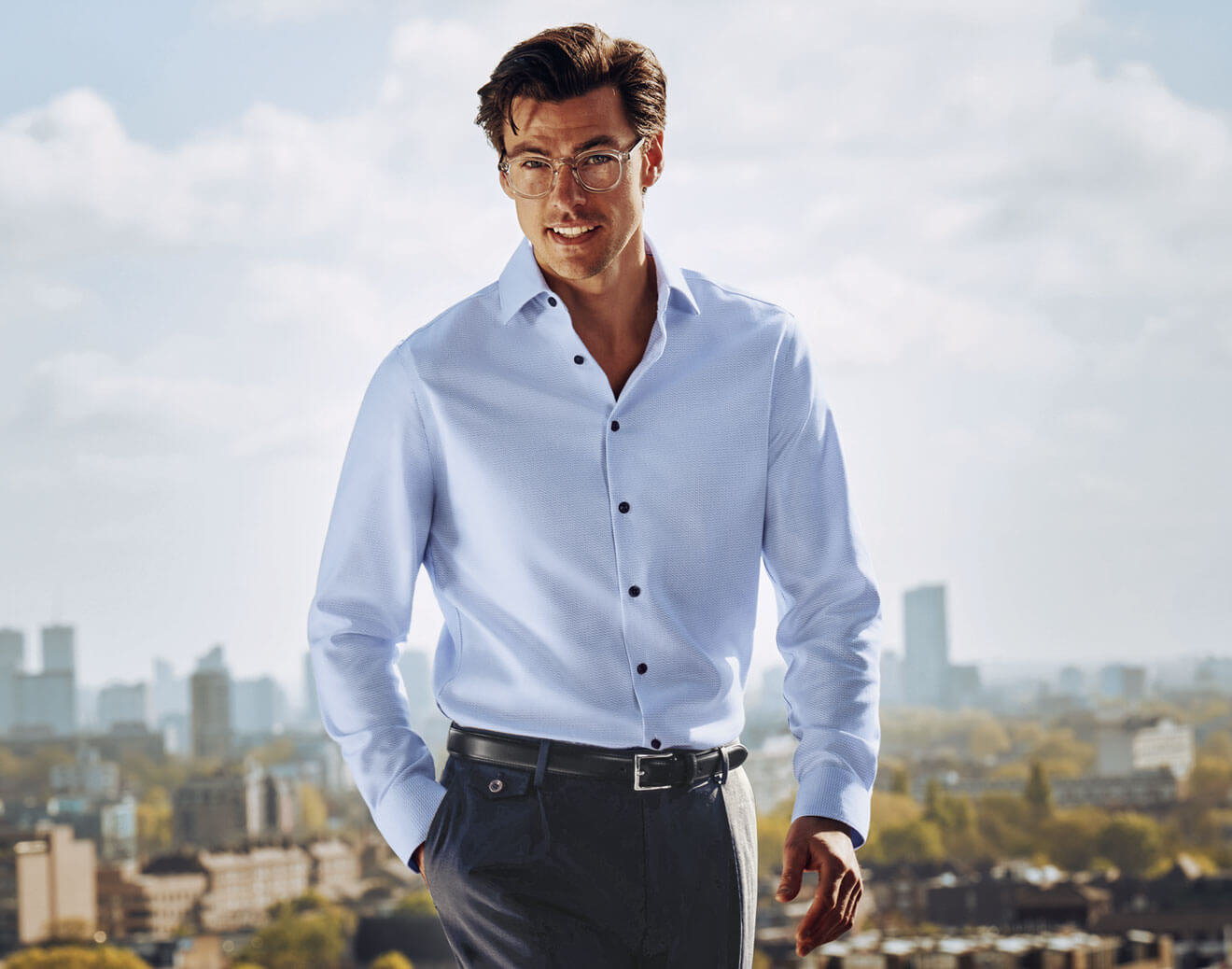
Business Casual vs Smart Casual: the simple difference

Business Casual: office-first
Think collared shirts or smart polos, chinos or tailored pants, neat knitwear, and proper shoes. A blazer is optional but useful.

Smart Casual: more flexible
You can lean more “casual” (depending on the occasion), but still keep it tidy, coordinated, and intentional.
Read More Read lessPick your office type (30-second decoder)
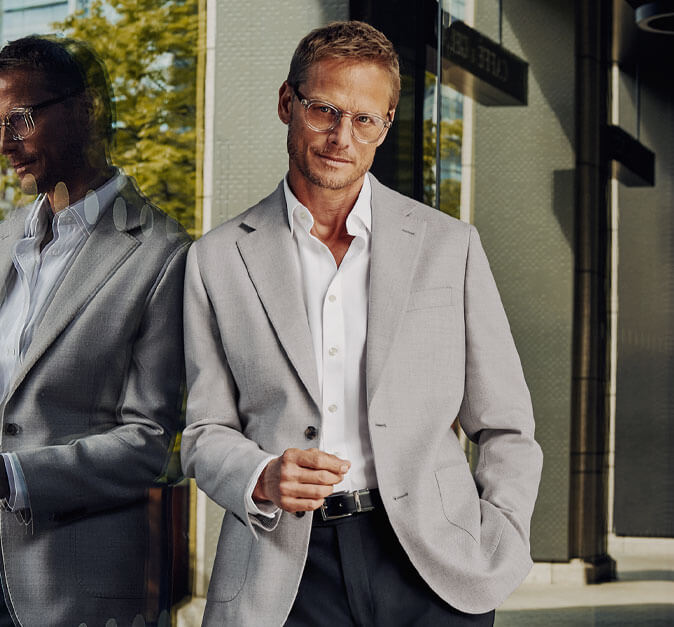
Corporate Office | Client-facing
Go for Business Casual: shirt, chinos or wool pants, blazer, loafers.

Modern Office | Tech | Creative
Classic Business Casual: smart polo or shirt, chinos, merino knit, clean leather sneakers if accepted (otherwise loafers/Derbies).

Casual Office | Start-up (no client meetings)
Relaxed Business Casual: polo or Oxford shirt, chinos, light knit, smart boots or smart sneakers (only if your workplace allows).
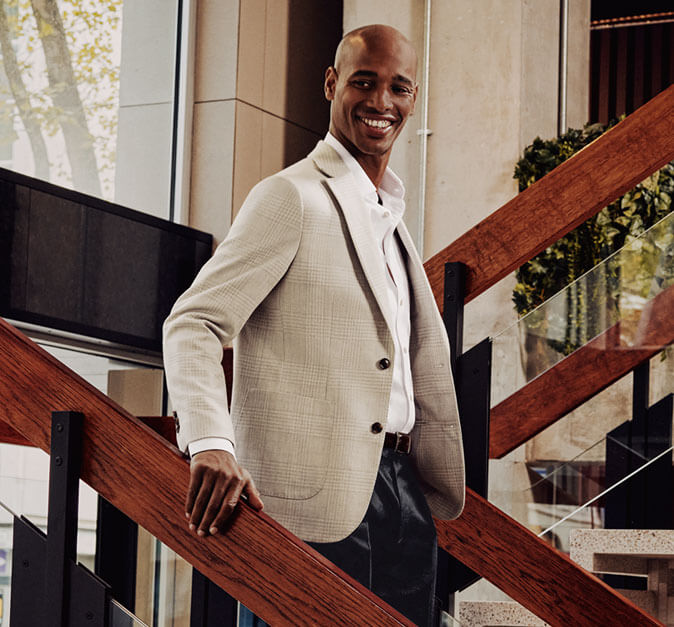
Interview | First day | Meeting senior leadership
Err on the smarter side: shirt, tailored pants or dark chinos, blazer, leather shoes. It’s easier to dress down later than up.
Business casual outfit ideas

Start with a proper shirt
The foundation of many of the best business casual clothes for men is still a sharp shirt. Choose a straightforward smart shirt, or go for shirts designed to look relaxed while staying polished. They’re ideal for the office, video calls, and days when you might be pulled into a meeting at short notice.
Business casual tip: "Keep patterns subtle and collars structured – it reads professional without feeling formal."
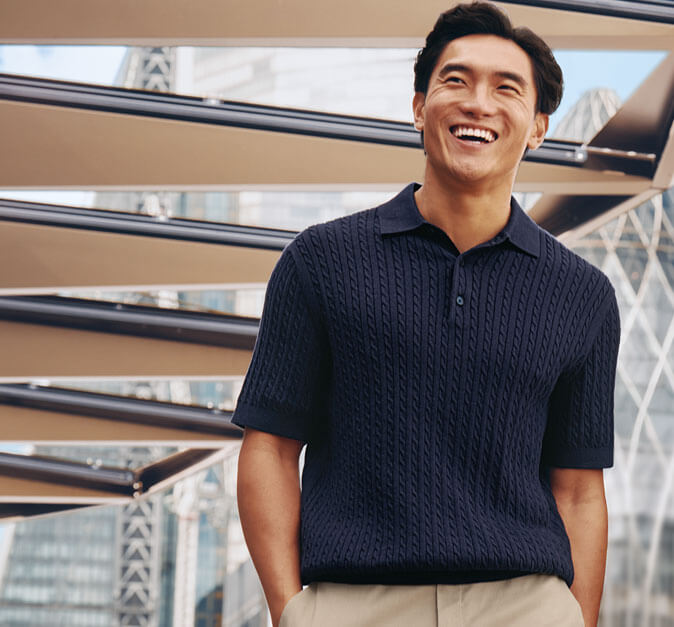
Or skip the shirt (the right way)
Not the obvious advice from a shirtmaker – unless the alternative is a well-cut polo that looks as smart as a collared shirt. A fine polo under a jacket can work comfortably in many offices, and it’s a reliable warm-weather option.
For summer business casual, skip the suit and try: solid-color polo + tailored pants + loafers for an easy, put-together look that still feels work-appropriate. For more inspiration, see our guide on how to style a polo.

Get a leg up
On video calls, the focus is on the top half, but in the office, a proper pair of pants matters. For business casual, you can usually do better than jeans (unless your workplace explicitly welcomes them). A good set of chinos is a dependable choice: smart enough for work, easy to wear, and versatile across seasons. Browse our casual trousers collection for more options.
Read More Read Less
Top it Off
A merino sweater is one of the easiest ways to make business casual look intentional. Keep the fit trim (without pulling) so it layers cleanly over a shirt or polo.
This works particularly well for office air-con, hybrid working, and those occasions when you want to look composed without wearing a jacket.

Softly Tailored, Smartly Turned-Out
Business casual often comes down to how you finish the outfit. A softly structured smart jacket (soft shoulders, light lining) instantly elevates chinos, knits, shirts, and polos.
If you’re unsure what the day holds – internal meeting or client drop-in – a blazer is the easiest “one-step smarter” solution.

Walk the Walk
Business casual shoes sit neatly between formal Oxfords and worn-out sneakers. The goal is footwear that looks clean, structured, and in good condition.
• Boots: work reliably with chinos and tailored pants
• Loafers: add a refined touch (suede is best saved for dry days)
• Sneakers: keep them minimal, leather, and spotless
Business casual for different seasons
01
Spring & Summer
Warmer weather calls for lighter layers and breathable fabrics. Smart polo shirts, lightweight cotton shirts and chinos are reliable options, while loafers can help keep your outfit feeling relaxed without looking too casual. An unstructured blazer is useful for meetings or air-conditioned offices.
02
Autumn & Winter
As temperatures drop, layering becomes increasingly important. Merino knitwear worn over a shirt creates a smart, professional look, while wool pants and smart boots provide additional warmth. A softly tailored jacket can add another layer of polish when needed, while a vest can be a practical option for more relaxed business casual environments. For more layering inspiration, see our guide on how to style a vest.
What to wear to a business casual interview

When in doubt, err on the smarter side. A shirt, tailored pants or dark chinos, and leather shoes will work for most business casual interviews. Add a blazer for corporate or client-facing roles, or whenever you'd like an extra level of polish.
For more guidance, read our guide on what to wear to an interview.
Common Business Casual Mistakes To Avoid
Business casual should feel polished, not accidental. A few simple rules can help keep your outfit looking intentional.
01
Overly casual sneakers: if your workplace allows sneakers, keep them clean, minimal and in good condition.
02
Worn or distressed jeans: unless your office has a particularly relaxed dress code, chinos or tailored pants are usually the safer choice.
03
Poor fit: even the smartest outfit can look untidy if shirts, pants or knitwear are too loose or too tight.
04
Too many casual pieces at once: a polo, chinos and loafers can work well; swap in sneakers, ripped denim and a hoodie, and the balance quickly shifts away from business casual.
05
Neglected footwear: smart shoes should look clean and well cared for, regardless of style.
tip
"When in doubt, keep things simple. Well-fitting clothes, quality fabrics and polished footwear will rarely look out of place."
Business Casual: Quick FAQ'S
faq
What is business casual for men?
A polished, office-appropriate way of dressing that’s less formal than a suit: typically a shirt or smart polo, chinos or tailored pants, knitwear or a blazer, and proper shoes.
Can I wear jeans for business casual?
Sometimes – but it’s workplace-dependent. If allowed, choose dark, slim (not tight), with no distressing, and pair with a shirt/blazer and smart shoes.
Do I need a tie for business casual?
Usually no. If you’re client-facing or unsure, keep one available – but a crisp shirt and blazer typically covers it.
Are sneakers business casual?
Only in more modern or casual offices. If you wear them, keep them minimal, clean, and in leather, and make sure the rest of the outfit is smart.


